
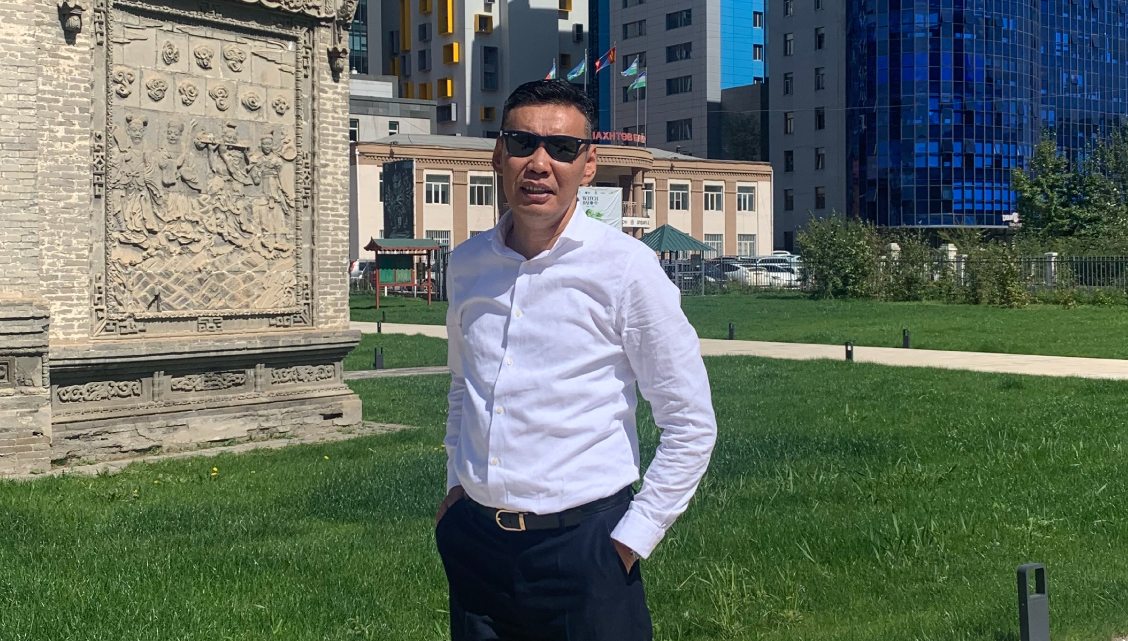
Enkhtaivan Bayasgalan, Manager, Erdenes Mongol
Markets are often misunderstood long before they are understood at all, flattened into easy stories that favour caution over curiosity. However, real change does not come with announcements; it dawdles, formed by institutions learning to adapt, by a new generation refusing inherited limits, and by leaders willing to work the long game. Somewhere between assumption and reality, entrepreneurship becomes less about extraction or speed and more about building systems that can endure.
It is through this work of endurance, not spectacle, that Enkhtaivan Bayasgalan has shaped his career. As a manager at Erdenes Mongol, Mongolia’s state-owned holding company that stewards the nation’s most strategic mineral assets, and through his work with the Deputy Prime Minister’s Office of Mongolia, Bayasgalan operates at the intersection of policy, capital, and long-term national interest. His work unfolds in the gap between how Mongolia is perceived and how it is steadily being rebuilt, patiently, deliberately, and with an eye on what lasts.
Foreign investors, Bayasgalan argues, often mistake Mongolia for a one-note story: rich ground, high risk, short horizons. The reality he sees from inside government and state enterprise is more complex. Governance frameworks are tightening. Institutions are maturing. A younger, digitally fluent generation is reshaping the intersection of capital, technology, and accountability. Opportunity, in this telling, is not limited to extraction but extends to value-added processing, energy transition, fintech, and the quiet rise of Mongolia as a logistics and energy connector between Asia’s largest markets. “Capital follows confidence and confidence is built when systems are designed to outlast cycles,” Bayasgalan shares. It is this belief, grounded in governance rather than hype, that defines his leadership and reframes Mongolia’s investment future.
When Volatility Is the Baseline
In emerging markets, volatility is not a flaw to be engineered away; it is the terrain itself. Bayasgalan learned this not in spreadsheets but in systems, through his work at Erdenes Mongol and alongside the Deputy Prime Minister’s Office of Mongolia, where financial decisions are tested against real-world friction. Linear growth assumptions and tidy currency pegs, he argues, belong to calmer waters. Mongolia’s reality is different, and pretending otherwise is how models fail quietly and projects fail loudly.
Bayasgalan approaches finance as capital structuring rather than mere forecasting. Buffers for commodity cycles and currency swings are built directly into CAPEX and OPEX, not tacked on as afterthoughts. A model must confront uncomfortable realities early, including its ability to withstand a 30 per cent drop in coal prices or a border bottleneck that freezes logistics for three months. If it cannot, the problem is not the market; it is the structure. “Models don’t break because markets move. They break because we pretend they won’t,” states Bayasgalan. His solution blends traditional equity with trade finance and structured debt, aligning repayment with actual cash flows rather than calendar promises, finance designed to breathe, bend, and endure.

Translating Trust Across Capital Borders
The gap between global investors and local projects is hardly about what lies in the ground; it is about what stands on paper. From his roles at Erdenes Mongol and within the Deputy Prime Minister’s Office of Mongolia, Bayasgalan has seen promising assets stall not for lack of scale or quality, but for lack of alignment with global expectations. Too often, local project owners assume that a license and a resource report should speak for themselves. However, International capital listens for different signals: ESG discipline, transparent governance, credible reporting, and a clear path to exit, long before it considers geology.
Bayasgalan’s work sits squarely in this uncomfortable middle. He approaches the challenge as a matter of translation, not persuasion, preparing projects to meet international due diligence standards before they ever enter an investor conversation. Governance structures are tightened. Reporting is elevated. Assumptions are made explicit. Trust is built deliberately, not improvised. “Capital doesn’t travel on potential alone. It moves when standards are shared,” asserts Bayasgalan. By forcing this alignment early, his approach replaces friction with fluency and turns cross-border skepticism into durable partnerships.
From Extraction to Throughput
For a landlocked economy, value is only real once it moves. Bayasgalan has observed this truth play out repeatedly: world-class coal and copper can lose their worth the moment they stall at the border. For years, Mongolia invested heavily in production capacity, assuming extraction was the hard part. It wasn’t. The real constraint lay downstream, where rail throughput, border procedures, and coordination failed to keep pace.
Bayasgalan has watched mines slow not because ore ran out, but because stockpiles grew too large to move. In that sense, logistics became the ceiling on growth. He argues the country’s economic future is tied as much to the efficiency of railways and crossings as to what lies beneath the ground.
Technology enters this story as leverage. Blockchain and IoT have moved beyond novelty precisely because they solve a trust deficit, proving provenance, tracking quality, and unlocking trade finance through transparent supply chains. AI, meanwhile, is reshaping exploration and energy grids. “You don’t compete with ports by digging faster. You compete by moving smarter,” In Mongolia’s case, the path forward runs through logistics, both physical corridors and digital ones that clear the way before cargo ever arrives.
Clearing the Path Before the Cargo Moves
Bayasgalan notes geography is a fact; friction is a choice. He has come to see Mongolia’s landlocked status not as a sentence but as a design problem. A digital corridor, in his telling, is less about technology for its own sake and more about choreography, harmonising customs data, logistics tracking, and payments so that information moves ahead of the cargo. When clearance, sanitary checks, and settlements are completed on secure, shared systems before a truck reaches the border, the so-called landlocked penalty begins to thin.
That same systems thinking shapes his approach to mining and sustainability. As Manager of Responsible Mining at Erdenes Mongol, Bayasgalan lives with the pressure for short-term dividends that shadow state-owned assets. He resists the false trade-off. Environmental shortcuts may flatter a quarterly report, but they can shutter a mine months later through protests or permit revocations. “Sustainability isn’t a cost, It’s the license to operate,” Bayasgalan affirms. By structuring investments to reinvest early returns into communities and rehabilitation, he argues, assets remain productive for decades, proof that when rules are designed to endure, growth follows suit.
From Resource Frontier to Enduring Platform
Mongolia’s next phase of development, in Bayasgalan’s view, is shaped less by acceleration than by architecture. In Northeast Asia, a structural shift is underway. For decades, Mongolia has been defined by what lies beneath its soil. Increasingly, its enduring value is determined by what shines above it, the winds that cross it, and the digital corridors that run through it. Bayasgalan’s framework reframes the country’s geography from landlocked constraint to land-linked advantage through a circular model that binds renewable energy, artificial intelligence, and sustainability into a single economic system. Mongolia’s vast solar and wind resources, particularly across the Gobi Desert which averages over 270 sunny days per year, offer a path away from energy import dependence through hybrid systems integrating Battery Energy Storage, stabilising the domestic grid and securing industrial continuity. Beyond this foundation lies a second horizon. Through initiatives such as the Asian Super Grid and high-voltage direct current transmission, Mongolia is positioned to export clean energy at scale, transforming renewables into a strategic regional commodity.
The second pillar is digital infrastructure. As global demand for AI compute power accelerates, data centres emerge as critical economic assets. Mongolia’s cool, dry climate enables free-cooling efficiencies that reduce operating costs by up to forty percent, while its position between Russia and China supports resilient Europe-Asia data corridors. Low Earth Orbit satellite connectivity, including Starlink gateway infrastructure, provides the redundancy required for Tier III and Tier IV facilities. The system closes through sustainability. Large-scale afforestation under the Billion Tree Initiative, combined with renewable deployment, generates verified carbon credits for international markets. Renewable energy powers data centres; data centres generate revenue and recoverable heat; trees sequester carbon, reduce dust storms, and fund further expansion. In this design, endurance is not an outcome of growth, but its governing principle.
The New Mongolian Leadership Compact
For Bayasgalan, leadership for the next generation begins with a shift in posture. He believes that competing globally requires what he calls global competence anchored in local resilience, a refusal to be limited by the size of the domestic market or by inherited assumptions about geography. From his vantage point at Erdenes Mongol and through his work with the Deputy Prime Minister’s Office of Mongolia, Bayasgalan has learned how quickly capital moves toward clarity and away from complacency.
His own path, shaped by academic training at the London School of Economics and professional experience in Hong Kong, reinforced a simple truth: capital carries no flag. It responds to risk-adjusted returns, institutional credibility, and execution. He argues Mongolia’s location is not a handicap but a hinge, a strategic bridge between competing powers for those who know how to operate at scale. That demands fluency beyond English, into technology, international finance, and governance. “Integrity travels further than ambition,” Bayasgalan states. In a crowded global marketplace, he insists, adaptability and trust are the currencies that compound longest, and the leaders who endure are those who learn to think beyond borders without losing their footing at home.